Exploring the pull of Norse history through the games in my collection
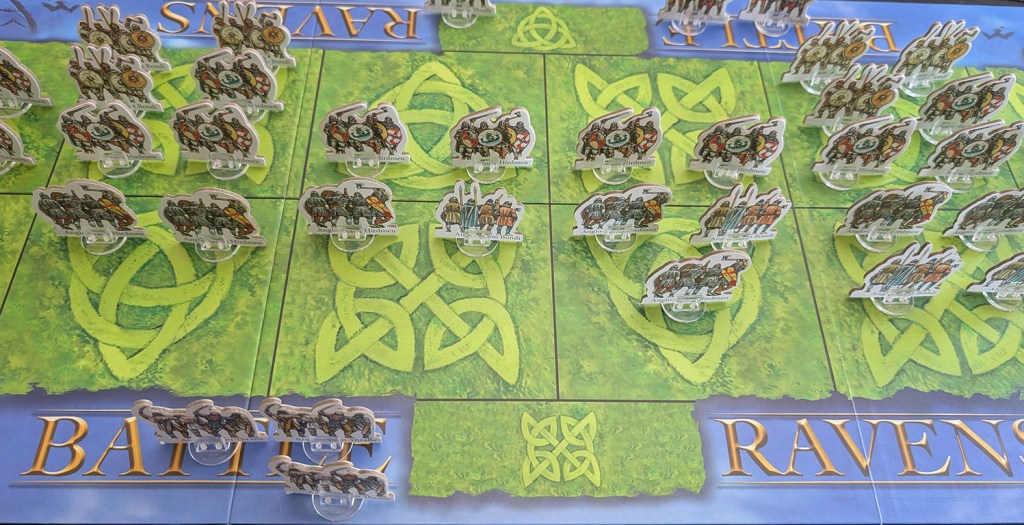
Battle Ravens sits on my shelf like a secret. It’s a hidden gem that deserves far more attention than it gets—a tight, elegant game about shieldwall combat that somehow captures the brutal simplicity of Dark Age warfare. I’ve loved it enough to create solo variants for it, multiple times, because I needed ways to keep playing when no opponent was available.
Dan Mersey’s other designs occupy nearby shelf space. Age of Penda and Dux Bellorum both scratch that same itch for Dark Age conflict, that period when kingdoms rose and fell on the strength of shield arms and the courage of warriors standing shoulder to shoulder.
Then there are the euros. Explorers of the North Sea and Raiders of the North Sea have permanent places in my collection—games that approach the Viking age from a different angle, trading combat for engine-building and worker placement. And 878 Vikings: Invasions of England, with one of the most gorgeous maps I have seen in a board game, that has outlasted every other game in the Academy Games series. The other historical entries came and went, cycled through my collection in the usual churn of acquisitions and culls. The Viking one stayed.
A Question Worth Asking
So why Vikings? What is it about this theme that keeps pulling me back?
The history offers everything a game designer could want: exploration across uncharted seas, intricate trade networks spanning continents, rich mythology that still echoes in our culture today. And yes—bloody raids, sudden violence, the clash of cultures meeting at sword’s edge.
It’s complex and contradictory, which makes it endlessly interesting. The Vikings were explorers and traders, poets and craftsmen. They were also raiders who struck terror across Europe, warriors who saw glory in battle and honor in a violent death.
But here’s the bigger question, the one that goes beyond Vikings: why are we drawn to games about violence at all?
What We Bring to the Table
Wargamers have been recreating battles for decades. We’re all bringing conflict to our tables in one form or another—ancient wars, medieval sieges, modern combat, fantasy battles. We roll dice to determine casualties. We move miniatures across terrain representing real places where real people died. We calculate odds and plan strategies for engagements that caused genuine suffering.
I think what draws us is the adventure. The sense of heroism in battle, even when we know the historical reality was brutal and terrifying. The centuries that separate us from the Viking age give us distance—enough separation to engage with the stories without confronting the immediate horror. We can appreciate the courage without experiencing the fear, admire the tactics without enduring the consequences.
The Vikings spread both culture and terror across Europe, and that tension between civilization and violence creates compelling narratives. They weren’t simple raiders or noble explorers—they were complicated people living complicated lives, and games let us explore that complexity from a safe distance.
History at the Table
For me, there’s another layer. I’m drawn to games about history. These Viking games—each at different levels of complexity and historical accuracy—let me dive into Norse culture and heritage in ways that reading alone can’t quite match.
Battle Ravens makes me feel the pressure of the shieldwall, that moment when formations collide and everything depends on holding the line. The North Sea games show me the Viking world beyond combat—the settlements, the exploration, the careful management of resources in a harsh environment. 878 Vikings puts me in the strategic position of planning campaigns across England, seeing the map the way a Norse warlord might have seen it.
Board games provide that experience better than most media. They’re interactive in ways that books and documentaries can’t be. They force decisions. They create consequences. They make history tangible—not just something that happened to other people long ago, but something you actively engage with, something that requires your choices and responds to your strategies.
Why This Hobby Endures
That’s why this hobby has outlasted every other one in my life. It connects me to the past while keeping me engaged in the present. It lets me explore periods of history that fascinate me, understand conflicts and cultures and moments that shaped our world.
And apparently, when it comes to the past, I keep coming back to Vikings. To that collision of exploration and warfare, trade and raids, mythology and historical reality. To games that let me stand in the shieldwall, command fleets across the North Sea, or plan the invasion of England.
The games in my collection tell a story about what draws me to this hobby. They’re not just entertainment (though they are that). They’re ways of understanding history, exploring human nature, and connecting with stories that echo across centuries.
Winter covers the longships with snow, but around my table, the raids never end.
 Pocho & Papa
Leave a comment