How completing Poker Dice Baseball and Triple Six Baseball paid off a debt decades in the making
When I finally typed the last rule for Triple Six Baseball and put the finishing touches on Poker Dice Baseball, something unexpected happened. I felt a weight lift—not the relief of finishing a design project, but something deeper. I had kept a promise to a ten-year-old boy who loved baseball and dice, who played games that existed only in memory, and who had been waiting decades for someone to bring them back.
That someone turned out to be me.
The Games I Almost Forgot
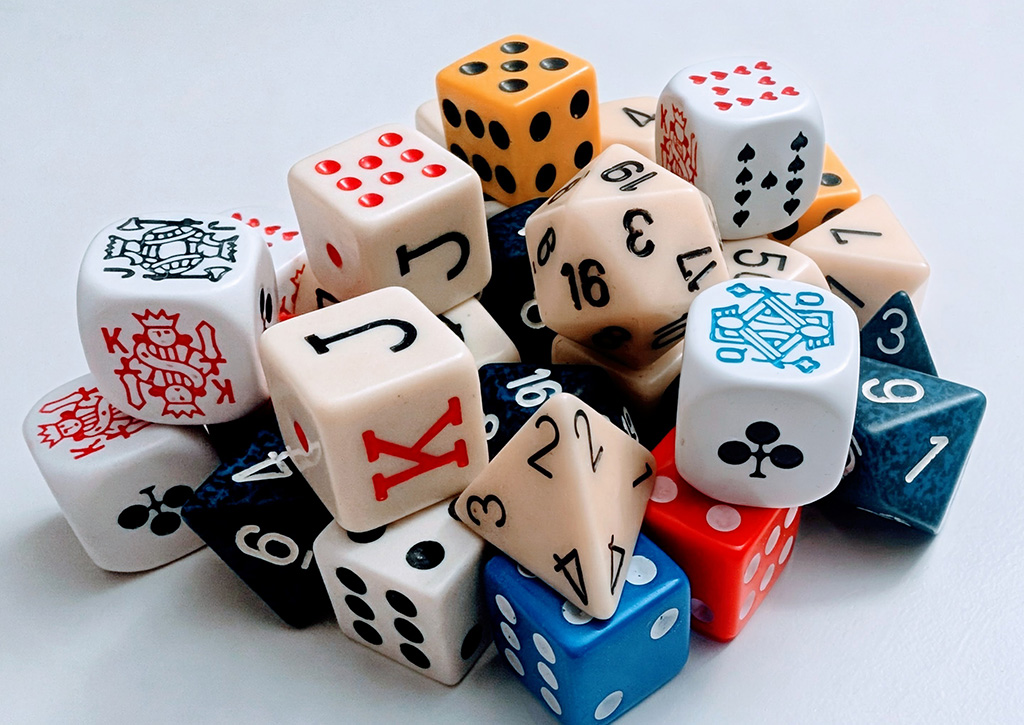
The memories are fragmentary, the way childhood memories often are. The details blur—rolling poker dice for a baseball game. Three aces meant a home run. Three jacks were a single. Three kings? A triple. I can still see those dice tumbling, still feel the excitement when the right combination came up. The game did not have written rules but was taught to me and my brother—explained by a distant relative or a friend whose name I’ve long forgotten. The rules lived in our heads, passed down orally like folk traditions. We played it over and over, those makeshift diamonds on paper scoresheets, those dice creating entire seasons in our imagination.
There was another game too, more complex. Three regular six-sided dice and two massive tables covered in instructions—different outcomes for every roll, changing based on what was happening in the game. There were cards for bunting and stealing, a chart for working the count to get on base. It felt sophisticated, intricate, like we were playing real baseball.
And then, somewhere in my teens or early adulthood, the games disappeared. Maybe the dice were lost. Maybe the memory of the rules faded. Maybe life just moved on, the way it does, pulling us away from childhood games toward more “important” things.
But I never entirely forgot them.
The Creative Drive of Childhood
Freud probably said something about childhood being the driving force behind everything we do as adults. I’m no psychologist, but I know this much is true: those lost games haunted me. Over the years, I’d find myself thinking about them. Could I recreate them? Could I find someone who remembered the rules? Could I track down the original games if they’d been published somewhere?
The urge to recover them would surface, then fade, then surface again. It became a background hum in my creative life—this sense of unfinished business, of something precious that had slipped away.
Childhood has a powerful hold on our creativity. The games we played, the stories we told ourselves, the worlds we built from cardboard and imagination—they shape what we create as adults. We spend our lives trying to recapture that feeling of pure play, that unselfconscious joy of making something just because it delights us.
For me, those lost baseball dice games represented something essential: the moment when I fell in love with game design without even knowing that’s what it was.
My Mother’s Games
Creating games also connects me to my mother in a way that makes this journey even more meaningful.
She was a game creator too, though she never would have called herself that. She’d take her memories of Monopoly sets and rebuild them from scratch. With paper, colored pencils, dice, and enormous amounts of love and imagination, she’d create new versions for us to play.
I remember watching her work, the careful way she’d draw the properties, color in the spaces, write out the rules. She wasn’t trying to improve Monopoly or innovate on its design. She was doing something simpler and more profound: she was making sure we could play. She was creating joy from almost nothing, transforming scraps into entire worlds.
When I sit down to design games now—rolling dice, testing mechanics, writing rules—I’m doing what she taught me. Not just the technical work of game design, but the deeper lesson: that games are made of love as much as they’re made of cardboard and dice. That creating something for people you care about is reason enough to create.
Simple Games, Profound Meaning
I know Poker Dice Baseball and Triple Six Baseball won’t revolutionize the board game world. They’re not going to win awards or appear on “Top 10” lists. They’re simple dice games with straightforward mechanics, the kind of games you can teach in five minutes and play in half an hour.
But they were never meant to change the industry. They were meant to settle a debt.
When I look at those completed rule sheets now—every outcome charted, every situation accounted for, every mechanic tested and refined—I can finally turn to that younger version of myself and say: “I kept my promise. You can play again.”
I recreated the poker dice baseball game, remembering what I could and filling in the gaps with design sensibility honed over decades of playing games.
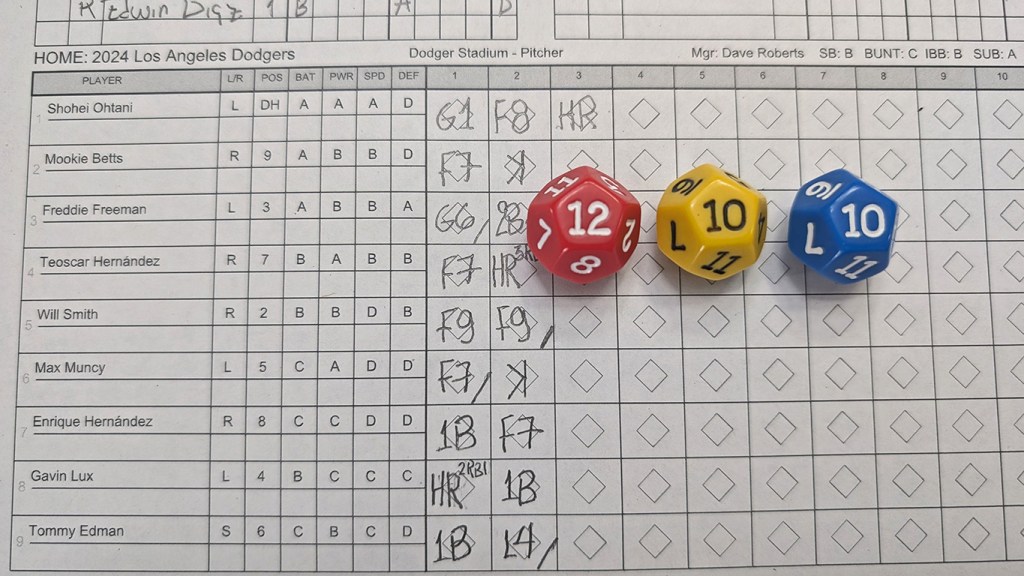
I recreated the three-dice game too, rebuilding those tables of outcomes, those steal and bunt mechanics. It’s simpler than the version I remember (or maybe memory made it more complex than it was), but it captures the essence—that sense of baseball unfolding through dice rolls, where every combination tells a story.
The Greatest Reward
The real payoff came when my son sat down to play Triple Six Baseball with me. Watching him roll those dice, checking the outcome table, moving runners around the bases—I saw myself at his age, experiencing that same thrill.
He’s won his own baseball championship now, just like his grandfather and great-grandfather before him. And now he’s playing dice baseball at our kitchen table, adding his own chapter to a story that spans generations.
That feeling of “mission accomplished”—of recovering something lost, of keeping a promise to my younger self, of sharing these games with my son—it’s more than enough for me. It’s everything, really.
The Games We Carry
We all carry games from our childhood. Maybe it’s a board game you played with grandparents. Maybe it’s a card game your parents taught you. Maybe it’s something you made up with friends, rules scribbled on notebook paper, played until you knew them by heart.
Some of these games stay with us. Others disappear, lost to time and fading memory.
If you’re lucky—if you’re stubborn enough, creative enough, sentimental enough—you get the chance to bring them back. Not exactly as they were (you can never quite step in the same river twice), but close enough. Close enough to honor the memory, to keep the promise, to pass them on.
Poker Dice Baseball and Triple Six Baseball are my way of bringing back what was lost. They’re simple games, made with love and colored by memory, built on the foundation my mother taught me—that the best games are the ones you make for people you care about.
The debt is paid. The promise is kept. And on winter nights in Canada, when snow covers the ballparks and spring feels impossibly far away, we roll the dice and play ball.
 Pocho & Papa
Leave a comment